
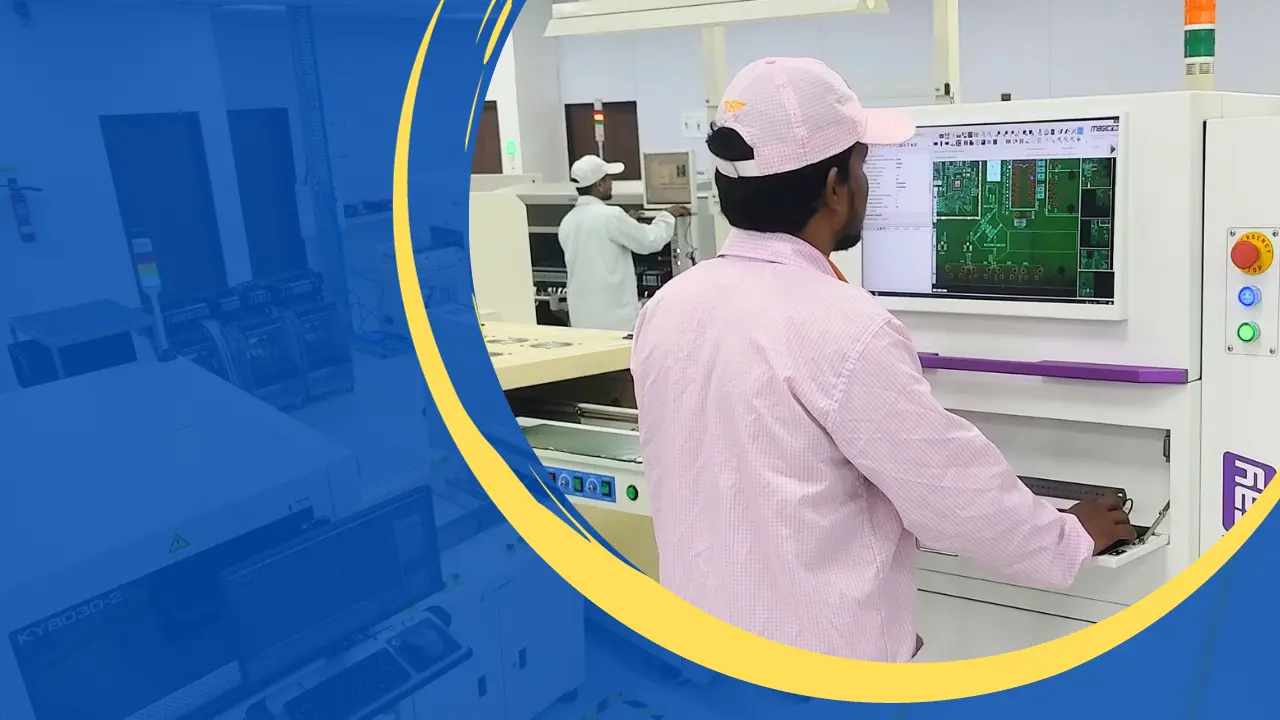
Automated Optical Inspection (AOI) plays a critical role in ensuring the quality and reliability of PCB assemblies. In modern electronics manufacturing, 2D AOI machines are widely used to detect defects, improve production efficiency, and maintain high-quality standards.
In this blog, we explore the key advantages of 2D AOI machines in PCB assembly and how they contribute to improved manufacturing performance.
High Precision Inspection:
2D AOI machines use high-resolution cameras and advanced image processing algorithms to detect even tiny defects on PCBs, such as soldering issues, missing components, and misaligned parts. This level of precision is difficult to achieve consistently with manual inspection.
Speed and Efficiency:
AOI machines can inspect PCBs at high speeds, typically much faster than manual inspection. This efficiency helps maintain or increase production throughput without sacrificing quality.
Consistency:
AOI systems provide consistent and objective results, eliminating the variability associated with human operators. This ensures that every PCB undergoes the same rigorous inspection process.
Reduction in Human Error:
Human operators can make mistakes due to fatigue, distraction, or oversight. AOI machines are not susceptible to such errors, reducing the likelihood of defects passing through the inspection process.
Quick Setup and Changeover:
Many 2D AOI machines have user-friendly software interfaces that make it easy to set up and configure inspection parameters. This enables quick changeovers when transitioning between different PCB designs or product variations.
Defect Classification:
AOI systems can classify defects based on severity or type, allowing manufacturers to prioritise and address critical issues promptly. This helps in focusing resources on areas that require attention.
Data Logging and Traceability:
AOI machines capture and store inspection data and images for each PCB, providing traceability and a detailed record of the manufacturing process. This data can be valuable for quality control and process improvement.
Cost Savings:
While there is an initial investment in AOI equipment, the long-term cost savings are substantial. Reducing defects, rework, and the prevention of faulty products from reaching customers can lead to significant cost reductions.
Quality Improvement:
Continuous monitoring and inspection by AOI machines lead to ongoing quality improvement in the PCB assembly process. This results in higher-quality products, fewer customer complaints, and improved brand reputation.
Integration with SMT Lines:
AOI machines can be seamlessly integrated into surface mount technology (SMT) production lines. They can work alongside other automated equipment, ensuring a smooth and efficient assembly process.
Real-time Feedback:
AOI systems provide real-time feedback to operators and can trigger automatic actions, such as rejecting faulty PCBs or adjusting machine settings to address detected issues immediately.
Non-contact Inspection:
AOI is a non-contact inspection method, which means there is no physical contact with the PCB components. This reduces the risk of damage to delicate components during the inspection process.
In the highly competitive electronics manufacturing industry, 2D AOI systems have become indispensable tools for ensuring the quality and reliability of PCB assemblies while optimising production efficiency. Their ability to detect defects early in the process helps prevent costly rework and ensures that only high-quality products reach customers.
Conclusion
2D AOI machines have become an essential part of modern PCB assembly processes. From detecting defects early to improving production efficiency and reducing costs, their benefits are significant.
By integrating 2D AOI in PCB assembly, manufacturers can ensure consistent quality, minimise errors, and stay competitive in the electronics industry.
FAQs
What is 2D AOI in PCB assembly?
2D AOI (Automated Optical Inspection) is a technology used to inspect printed circuit boards for defects using cameras and image processing.
Why is AOI important in PCB manufacturing?
AOI helps detect defects early, improves quality, and reduces rework costs.
What defects can AOI detect?
AOI can detect soldering defects, missing components, misalignment, and surface issues.

No comment