Electronic technologies are changing the way that businesses operate. Products such as control systems, medical devices, industrial automation, EVs and IoT devices all use electronic systems within them. These are highly engineered.
However, creating an electronic product involves many steps beyond just designing a circuit. Businesses need to consider hardware creation, components, PCB design, prototyping, assembly, testing, mechanical integration and planning.
Choosing the correct electronics design and manufacturing company can be a key decision for OEMs, start-ups and product development businesses.
Working with an experienced partner will make the transition from designing your first idea into a production-ready electronic system easier. Having both engineering and manufacturing capabilities will identify any issues early, improve your designs for manufacture and mean your production will be more structured.
This guide will help you understand what electronics design and manufacturing companies offer, what the stages of product development are, what technologies they use, what industries they work in and what factors to consider.
What is an Electronic Design & Manufacturing Company?
These companies provide engineering and manufacturing services that can help your business design, manufacture and put together electronic products.
Depending on what they offer, this can be a full service providing everything your product needs, or just certain parts.
They could offer:
- Electronic hardware design.
- Electronic systems design.
- PCB design.
- Component selection.
- Firmware.
- Mechanical design.
- PCB prototyping.
- SMT & THT assembly.
- Quality assurance.
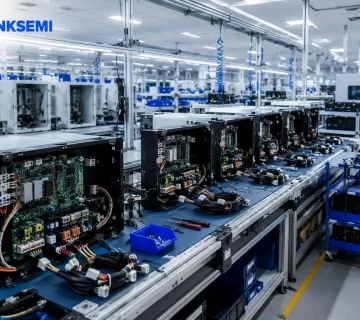
- Box build.
- Product validation.
- Manufacturing.
For example, if you are designing an industrial monitoring device, you may work with an electronics manufacturing company. They can help you with your initial product requirements by helping you design the electronic architecture, component selection, PCB design, prototyping and preparing it for manufacturing.
What they do will depend on what has been agreed between the customer and manufacturer.
Difference Between EMS and ODM
Two important terms found in the electronics industry are EMS and ODM.
Electronics Manufacturing Services: This is a service provider providing manufacturing services. This can include sourcing components, PCB assembly, Inspection, Testing and Support.
Original Design Manufacturing: This is also a service provider but provides more product design and development. ODM service providers may provide additional support to develop your products, including hardware design, prototyping and manufacturing.
There are some companies that provide both services, meaning you can have an engineering and manufacturing partner for your products.
Why you should use electronic design and manufacturing services
Getting an electronic product can be challenging. A good engineering and manufacturing partner can help.
1. Good product planning
To have a successful electronic product, you need to have clear requirements.
You will need to know what functions it has, in what environment it will be used, how much power it uses, how it connects, what size it should be and what the expected performance of the product is.
Using an experienced partner will help you plan out your requirements.
2. Design for Manufacturability
Design for Manufacturability will ensure your electronic product can be manufactured in an efficient manner.
Sometimes designs can be functional but have manufacturing issues.
This process will help identify:
- Incorrect component footprints
- Poor component placement
- Components that are difficult to source
- PCB routing issues
- Thermal management issues
- Soldering issues
- Interference issues
- Mechanical issues with testing.
By identifying these issues whilst developing your product, you will avoid re-designing parts which aren’t needed.
3. Manufacturing facilities
Having a manufacturing facility for electronics can be expensive. You will need investments in equipment, testing, staff and quality systems.
Using an experienced manufacturer will give you the right manufacturing facilities.
4. Moving from prototype to manufacture
Just because a prototype works well doesn’t mean it can be manufactured in large quantities.
There are many things to consider, such as manufacturing, component availability, repeatable assembly and testing.
Having a partner who has been involved in developing your product will help you prepare for a controlled move to manufacturing.
Key Stages of Electronic Design
An electronic product will typically go through several key stages.
1. Product Concept & Requirements
Understand what the customer wants and the technical requirements.
Engineering will look at;
- Product Functionality
- Operating Conditions
- Electrical Requirements
- Power Consumption
- Connectivity
- Dimensions
- Cost to Manufacture
- Quantity to manufacture
- Industry Standards
As an example, an EV Charging Controller will have very different operating requirements from a portable medical monitoring device. This needs to be incorporated into the electronics design, component selection and testing.
Having clear requirements can help to avoid any confusion.
2. Electronics Design
Designing the electronics of the product.
Engineers will choose suitable components and create circuit diagrams to provide the required functionality.
Common components used;
- Microcontrollers/Processors
- Integrated Circuits
- Resistors/Capacitors
- Power Management
- Sensors
- Memory Components
- Communication Components
- Connectors
- Protection Components
Components should be chosen to suit the electrical performance, availability, life cycle, operating temperatures and cost.
Designing this with future manufacturing in mind and ensuring that suitable alternatives are available.
3. Printed Circuit Board Design
Engineering will create the Printed Circuit Board (PCB) layout.
This will take into consideration;
- Component Placement
- Signal Integrity
- Power
- Earth
- Thermals
- No. of Layers
- Electrical Clearance
- Dimensions
Depending on the product, single-, dual-, or multi-layer PCBs may be required.
Careful PCB design is particularly important for high-density electronics. Any small issues during the design could impact electrical performance and quality of manufacture.
4. Prototyping
Often manufacturers and engineers will produce a prototype.
This can help to ensure that the electronic design will work as required.
Testing can be done to ensure;
- Circuit functionality
- Component compatibility
- PCB Dimensions
- Thermals
- Mechanical
- Firmware
- Feasibility of Assembly
Issues can be identified during prototyping that may not have been apparent during design of the circuit or PCB.
This can be an excellent opportunity for improving any issues whilst designing a new product for the business.
5. Component Sourcing
Component sourcing is another key part of electronic design.
Even if you have a great PCB design, delays can occur if you cannot source key components.
Manufacturing Partners can help with sourcing components, managing suppliers and planning materials.
Components will be sourced considering;
- Component Specs
- Supplier reliability
- Availability
- Lead Times
- Quality Documentation
- Life Cycle
- Suitable Alternatives
Suitable technical evaluation of the component should be carried out and approved by the customer.
6. PCB Assembly
Once the design has been completed and materials sourced, the product can be assembled.
There are two common assembly processes;
Surface Mount Technology (SMT)
SMT is when components are placed onto the surface of the PCB. This is commonly used for small and high-density electronics.
The typical process for an SMT product is;
- Printing solder paste
- Solder Paste Inspection (SPI)
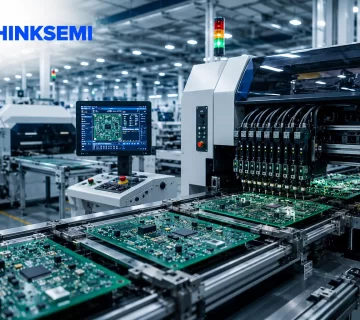
- Automated component placement
- Reflow
- Automated Optical Inspection (AOI)
- Testing
Through Hole Technology (THT)
THT is when components are inserted through holes in the PCB and soldered to create electrical and mechanical connections.
Used when components need to have mechanical strength, component design or specific application requirements.
Some electronics products will use both SMT and THT.
7. Inspection & Testing
Inspection can help to ensure that the electronics have been manufactured to meet the requirements.
Common inspection/testing methods;
| Technology | Purpose |
| 3D SPI | Checks solder paste deposition |
| AOI | Identifies visible assembly and soldering defects |
| X-Ray Inspection | Examines suitable hidden solder connections |
| ICT | Checks electrical connections and component characteristics |
| Functional Testing | Verifies product operation against defined requirements |
The correct testing method should be used for the complexity of the PCB, application of the product and customer requirements.
Additional validation may be required for products used in harsh environments.
8. Box Build
Many customers will want a complete electronics product.
Box build combines all the electronics and mechanical components to create a complete product or sub-assembly.
This may include;
- PCB Assemblies
- Harness
- Cabling & Connectors
- Enclosures
- Power Supplies
- Displays
- Mounting
- Controls
- Labelling & Packaging
Once the box build is complete, the complete assembly can undergo final inspection and testing.
This helps customers to manage many manufacturing processes in a more integrated way
Industries we can help with our Electronic Design & Manufacturing services
Automotive & Electric Vehicles
Many modern vehicles use electronic systems.
Some common examples that utilise electronic design and manufacturing are:
- Vehicle control modules
- Battery management systems
- Charging systems for EVs
- Telematics
- Infotainment systems
- Motor controllers
- Power management systems
The manufacturing requirements will depend on the application within the vehicle and the relevant quality requirements of the customer.
Medical
Many medical devices make use of electronic assemblies.
Examples include:
- Patient monitoring devices
- Diagnostic equipment
- Mobile devices
- Medical imaging
- Lab equipment
Manufacturers should be aware of the quality and regulatory requirements for the particular product.
Industrial Automation
Electronic products are used within industrial systems to monitor and control manufacturing processes.
Examples include:
- PLC controllers
- Industrial sensors
- Motor drives
- Automation panels
- Power control systems
- Robotics
Some of these products may require some careful consideration around thermal management, reliable connections and application-specific testing.
Aerospace & Defence
Electronic products are used to provide communication, navigation, control and monitoring.
Examples include:
- Avionics
- Communication
- Navigation
- Control
- Radar assemblies
- Specialist electronic subsystems
Manufacturers for these projects should be reviewed for relevant quality systems, documentation, traceability and testing. There will be a wide variation of requirements depending on the application.
Telecoms & IoT
Smart devices and telecom devices require electronic hardware.
Examples include:
- Networking devices
- Wireless communications
- IoT sensors
- Remote monitoring systems
- Smart controllers
- Smart industrial equipment
Considerations include compact PCB layout, availability of components and suitable testing.
How to choose the right electronic design and manufacturing partner.
You need to consider:
Design and Engineering
Do they have the capabilities to handle your project needs?
They should have hardware design, PCB design, DFM checks, prototyping and mechanical integration capabilities.
If you need firmware design, ensure they offer this.
Manufacturing Technology
What manufacturing capabilities do they have?
Depending on the type of product, you will need:
- Automated SMT Lines
- THt Assembly
- Reflow
- Wave
- AOI
- 3D SPI
- ICT
- X-ray
- Conformal Coating
Prototype and Small Batch
Can they support prototyping, small batch runs and higher production levels?
Minimum order quantities, manufacturing capacity, lead times and how they go from prototyping to manufacturing.
Quality
Quality systems, process documents, traceability and inspection processes.
Ensure they are currently certified and that their certification covers the services and industry of your project.
Component Sourcing and Supply Chain
How well do they source components?
Material planning, component sourcing and managing availability.
Having a good process in place will help minimise any issues during production.
Technical Communication
Good communication is key throughout the whole process.
They should be able to talk about any design changes, material changes, testing requirements, production timelines and quality issues.
Why Choose Us?
ThinkSemi Infotech Limited offers an array of electronics manufacturing services and product engineering solutions for a wide range of industries.
We offer ODM services, PCB Assembly, PCBA Prototyping, Component Sourcing, Product Engineering, Testing, Harness Assembly and Box Build.
Our product engineering and ODM services provide solutions for design and prototyping services, PCB design, mechanical integration services, component sourcing and DFM. Along with our manufacturing services, we help you manage your manufacturing process.
Manufacturing is performed in our facility located within the SIPCOT IT Park in Siruseri, Chennai, Tamil Nadu.
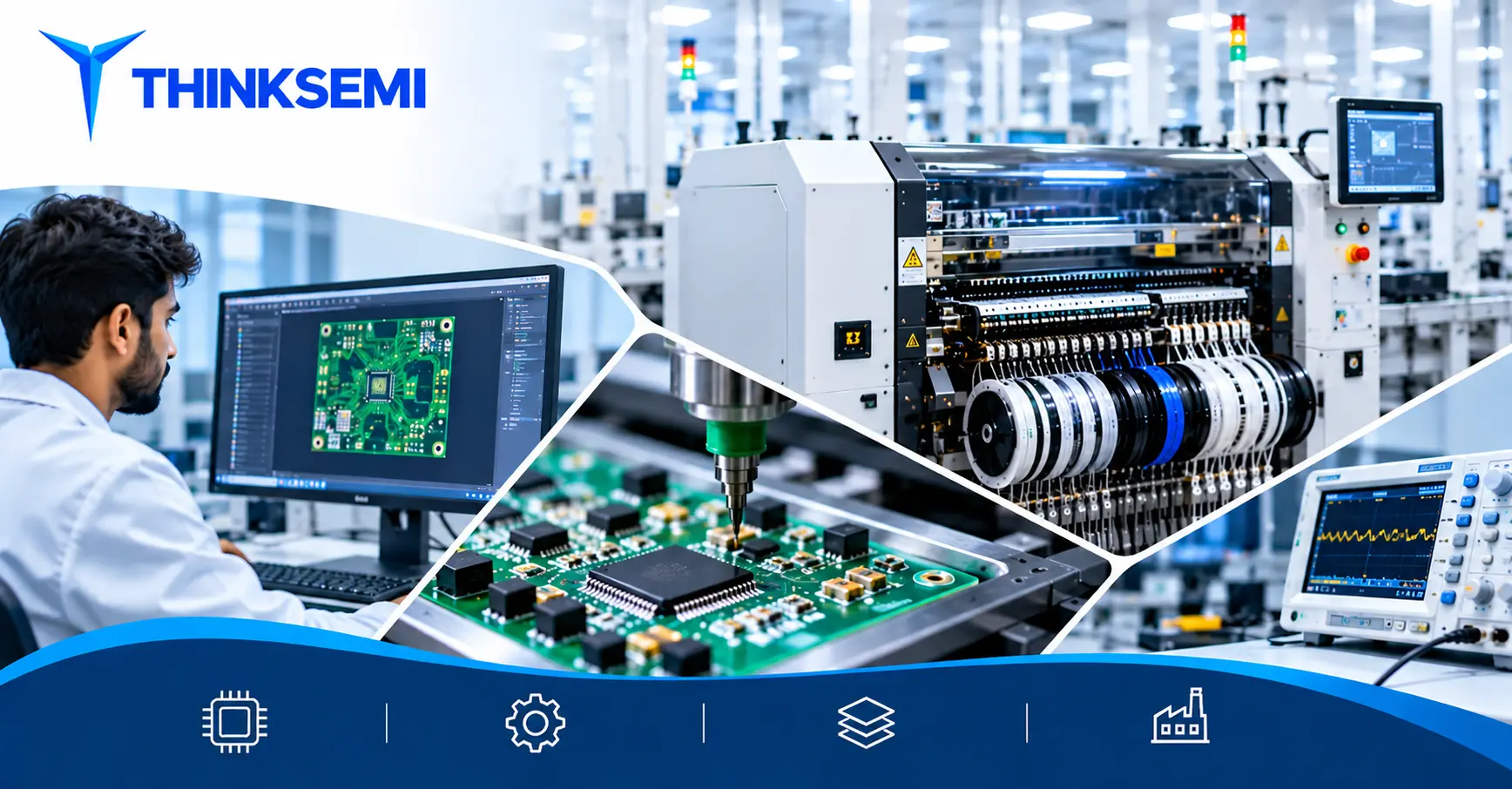
Our manufacturing services include Automated SMT machines, Wave Solder, Optical Inspection, 3D SPI, ICT, Depaneling and Conformal Coating.
We offer solutions for Automotive, Industrial, Medical, EV, Telecommunications, Defence and other electronics sectors.
Our product engineering and manufacturing services help OEMs manage their product development process.
To choose the best manufacturing solution for your product specifications, please provide us with your PCB design, BOM, quantities and testing requirements.
Common Mistakes to Avoid During Electronics Development
Even well-planned electronic products can have issues with the following:
1. Not Verifying Your Prototype
If you jump straight into mass production, you’re more likely to experience issues with manufacturing and operation. Make sure you verify your prototype first.
2. Not Considering Component Availability
Whilst the component may be suitable for the initial development phase, it may not be easy to source at a later date.
3. No Consideration For Manufacturability
Engineering should consider component spacing, testability and assembly during design to ensure the PCB layout is suitable.
4. Not Planning for Testing Requirements
Consider testing requirements during the design process so that test points, jigs and testing processes can be planned.
5. Choosing a Manufacturer Based Solely on Cost
Consider the technical ability, quality processes, component sourcing support, lead times and scalability of manufacture.
FAQs
What is an electronic design and manufacture company?
An electronic design and manufacture company provides you with services that will help you develop and produce your electronic product. These services may include hardware design, PCB design, prototyping, sourcing components, PCB assembly, testing, and system integration.
What is the difference between electronic design and electronic manufacture?
An electronic design company will help you design your product using a range of engineering techniques. This could include the electronic architecture, circuit schematics, PCB design and product specifications. An electronic manufacturing company will take the designs and source the components needed to build your product.
Can an electronic design and manufacture company provide bespoke products?
Yes. An electronic design and manufacturing company with the correct ODM and product engineering capabilities can help design bespoke electronic products for you. Including hardware design, prototyping and manufacturing.
Why is it important to prototype a PCB?
By prototyping your PCB, it will allow your engineers to test your circuit design and see how the components will work together. It will also help identify any issues with the product before mass production.
Which industries use electronic design and manufacture services?
Electronic design and manufacturing services are used by many industries. These include Automotive, EV, Medical, Industrial Automation, Aerospace, Defence, Telecommunications, Consumer Electronics and IoT.
How do I choose the right electronic manufacturing partner?
Look at the partner’s engineering capabilities, PCB assembly, prototyping, component sourcing, inspection equipment, quality management, manufacturing capabilities and communication methods.
Conclusion
Selecting the correct electronics design and manufacturing partner will help turn your engineering idea into a reliable electronics product.
Each part of the process, from designing your hardware, developing a PCB, prototyping, sourcing and assembling components, testing, and system integration, will all contribute to your finished product.
Selecting a partner who understands your engineering requirements and manufacturing requirements will help to reduce risk. A good partner will be able to provide early design reviews, prototype validation, reliable sourcing, and correct quality checks.
ThinkSemi Infotech offers product engineering, ODM, PCB assembly, prototyping, testing, component sourcing and box building.
If you are looking to design a new electronics product or scale an existing product, contact us today to discuss your requirements. We can help with your engineering requirements, PCB assembly, prototype requirements and manufacturing plan.