Introduction
Contemporary electronic devices require circuit boards that are precision-manufactured to produce high-performance and reliable outputs. Examples of such items include smartphones, medical devices, automotive control units and industrial automation devices; all of these electronic products require properly designed and assembled printed circuit boards to produce optimal performance.
As electronic devices become denser and more sophisticated due to advancements in technology, there has been a significant growth in demand for professional printed circuit board assembly services. For businesses to meet the challenges posed by an increase in market demand, they need to partner with manufacturers who are capable of producing high-quality PCB assemblies; providing advanced testing; and supplying scalable production support.
PCB assembly is much more than simply putting together components onto a circuit board. PCB assembly is a vital segment of the PCB manufacturing process that plays an integral role in determining how well the product will work, how long the product will last, and its overall performance and reliability.
In this article, we will take a closer look at the various facets of PCB assembly, including the PCB assembly process, PCB assembly technology, many of the industries that use PCB assembly and some of the advantages of using PCB assembly services. Finally, we will discuss the importance of selecting an experienced PCB assembly partner to achieve positive results in your electronics manufacturing efforts
What is Printed Circuit Board Assembly?
Printed circuit board assembly is the step in the production of a fully functioning electronic circuit where electronic components are placed on a manufactured printed circuit board.
This stage takes a bare PCB and produces an electronics product.
Most professional PCB assembly services will offer:
- Surface-mount device (SMD) assembly
- Through-hole assembly
- Mixed technology assembly
- BGA assembly
- Prototype PCB assembly
- Function test
- Quality inspection
- Box build integration
PCB assembly is a key aspect of the electronics manufacturing process since the quality and reliability of the electronic product are largely determined by this phase.
How PCB Assembly Works
1. Solder Paste Application
First up in the PCB assembly sequence is the application of solder paste to specific pads on the PCB. A specialised stencil printer used for this purpose ensures precise placement of solder paste. It has several benefits: acts as a “glue” and also as a conductive medium that holds electronic components while soldering.
2. Component Placement
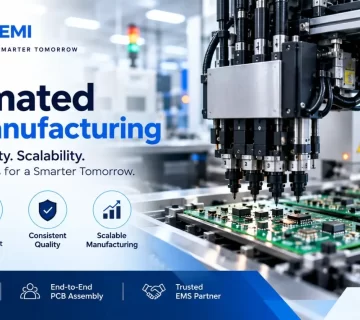
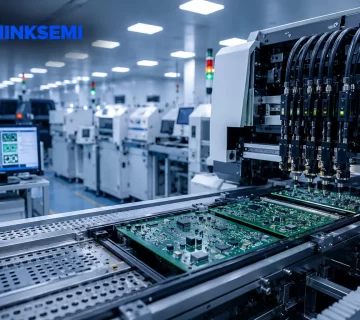
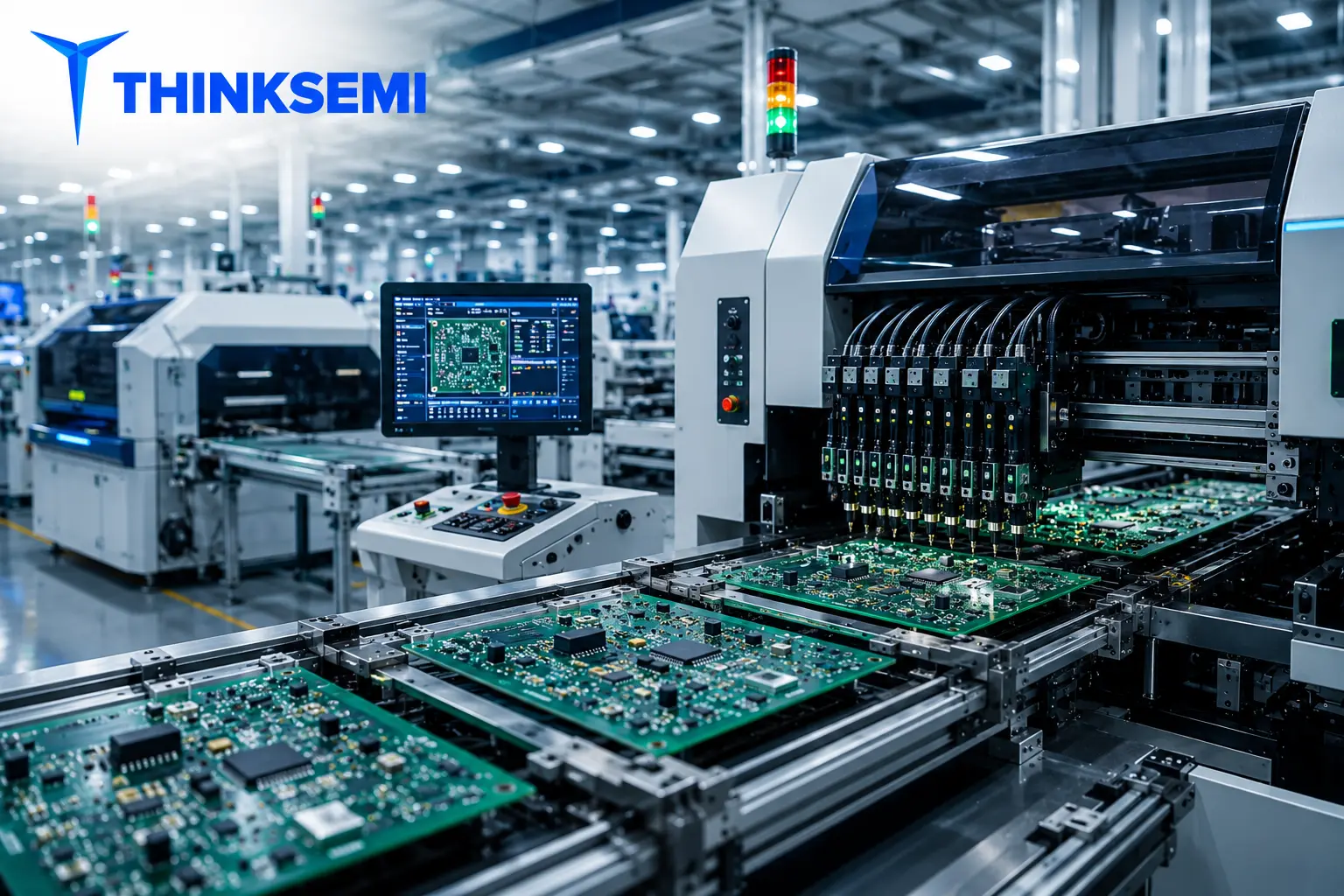
With the paste already in place, the process involves placing individual electronic components on the surface of the PCB. This is usually done by specialised pick-and-place machines. Today’s machines are highly efficient and are capable of placing thousands of components per hour with high accuracy, speed, reduced errors, improved reliability, and efficient manufacturing.
3. Reflow Soldering
After components are precisely in place, the PCB moves to a reflow oven. The oven heats the PCB in a carefully controlled manner. As it heats up, the solder paste melts, thereby establishing strong and secure electrical and mechanical bonds between components and the PCB pads.
4. Inspection and Testing
After solder reflow, thorough inspection and testing are required for quality assurance of the assembled PCB. This process usually involves various inspection methods, including: Automated Optical Inspection (AOI), X-ray Inspection, In-Circuit Testing (ICT), Flying Probe Testing, and Functional Testing. These methods ensure no defects make their way to the finished product.
Printed Circuit Boards Assembly Types
Surface Mount Technology (SMT) Assembly
SMT is widely popular among the new generation of electronics manufacturers for it offers such advantages:
- Space savings on a finished product.
- Faster assembly processes.
- Allows for a high density of components on a printed circuit board.
- Cost-effective due to automated manufacturing.
It’s commonly applied to mobile phones, Internet of Things (IoT), medical equipment, and consumer electronics devices.
Through-hole Assembly
This technique of assembling PCBs is based on inserting component leads through drilled holes in a printed circuit board and soldering them on.
Through-hole assembly is recommended for:
- Applications involving heavy power.
- Hard industrial hardware.
- Auto-electronics devices.
- Military and aerospace equipment.
Mixed Technology Assembly
Complex electronic devices that require the use of a mix of through-hole and SMT parts can be implemented through this technique. Mixed assembly technique of printed circuit board manufacturing is used to allow for maximum space utilisation and robust performance when it’s needed to utilise both technologies on a board.
Benefits of Professional Printed Circuit Boards Assembly
Better Product Reliability
When boards are assembled by a professional team, your components are placed perfectly, and every solder joint is solid. This means your product is less likely to fail, functions more consistently, and has better electrical performance!
Faster Production Cycles
The process of automated PCB assembly takes so much time out of the production process and makes things more efficient! That translates to a faster go-to-market time and less time from order to fulfilment! Plus, you can scale your production!
Precision Manufacturing
New SMT equipment has an incredible degree of precision, and inspections can automatically catch even the smallest errors! This lowers defect rates, and those fewer defects mean fewer products have to be redone. It also significantly reduces potential product failures!
Lower Production Costs
Outsourcing the entire printed circuit board assembly process frees up internal resources and capital. Plus, the cost is often less overall when working with professional assemblers! It keeps production standards high, even at a lower cost!
Which Industries Need PCB Assemblies?
Cars and Trucks
Today’s vehicles are loaded with PCB assemblies! From managing the battery and controlling the engine, to providing an awesome infotainment experience and power to those advanced driver-assistance systems (ADAS).
Medical Devices
The human body deserves the best! Healthcare providers count on high-reliability PCB assemblies in everything from patient monitoring devices and diagnostic equipment to the machines that create medical images.
Industrial Automation
Factories, machines, and everything in between need a brain! Industrial automation, PLC controls, robotics, and power management systems all depend on PCBs.
Consumer Electronics
From your smartphone and laptop to your favourite TV or smartwatch – the precision work of PCB assembly makes all of your favourite consumer electronics tick.
IoT and Connected Devices
As more and more “things” become internet-enabled, the demand for tiny and powerful PCB assemblies is only growing.
Choosing the Perfect PCB Assembly Partner
Manufacturing Skills
Does the provider have both SMT and thru-hole capabilities? Can they handle rapid prototyping? High-volume? Make sure they’ve got the manufacturing experience that aligns with your needs.
Quality Control
Find a provider that employs cutting-edge testing and inspection methods. This will catch issues early and ensure you get the highest-quality board.
Engineering Expertise
Work with a team of skilled engineers. They’ll be able to review and enhance your design to ensure that it’s both manufacturable and reliable.
Scalability
Need one board, but plan to grow to thousands? Make sure your partner can handle low-volume prototypes and full production runs.
Supply Chain
Can the provider effectively manage a supply chain of components? A provider with a proven track record in procurement and inventory control ensures an uninterrupted manufacturing process.
Let Us Tell You Why Thinksemi Infotech Is A Trustworthy PCB Assembly Partner:
For automotive, industrial, medical, consumer electronics, or IoT companies, we at Thinksemi Infotech provide the highest-standard printed circuit board assembly solution.
At Thinksemi Infotech we can do for you:
- SMT PCB Assembly
- Through-hole PCB Assembly
- Prototype PCB production
- Mass-production solutions
- Test & inspection
- Box build Assembly
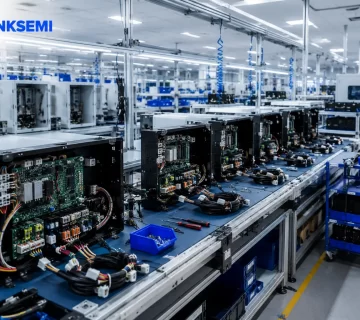
We own sophisticated manufacturing infrastructure and maintain stringent quality standards, providing businesses the convenience to carry out scalable electronics manufacturing.
Conclusion
When it comes to producing modern electronics, you’re gonna want PCB assembly. Whether you’re designing consumer electronics, industrial automation equipment, medical hardware or the latest in automotive technology, a reliable source for quality PCB assembly is absolutely crucial to how your products will perform in the real world and to the overall success of your product design process.
Collaborating with a knowledgeable PCB assembly provider can help any company optimise their production process, minimise manufacturing expenses, and help to bring products to market at a faster pace.
If you require reliable Printed Circuit Board (PCB) assembly, look no further than Thinksemi Infotech, which can confidently handle your next electronics manufacturing project with a high level of quality and scalable production output.