Introduction
The electronics industry has progressed at an unprecedented rate over the last ten years, with electronic gadgets becoming even more advanced, sophisticated, and powerful. Electronic products, including smartphones, automotive systems, industrial automation equipment, and medical electronics, all require advanced circuit board manufacturing technologies.
One such key technology that has enabled the industry to progress is SMT Assembly. The use of SMT (Surface Mount Technology) assembly in PCB manufacturing has become the global norm due to its efficiency and compactness, among other features.
Most modern electronics today utilise SMT assembly in their production as it is the most scalable and effective form of electronic circuit board manufacturing.
In this article, we will discuss what SMT assembly entails, how it works, its benefits and significance in the electronics manufacturing industry.
What is SMT Assembly?
SMT Assembly or Surface Mount Technology Assembly refers to the process whereby electronic components are directly soldered onto the surface of a printed circuit board (PCB). As opposed to the conventional way of assembling electronic components on PCBs, which involves passing wires through drilled holes in the circuit board, SMT assemblies involve placing electronic components on the PCB surface.
This technique has made it possible to make electronics products more:
- Compact
- Efficient
- Reliable
- Automated
SMT assembly technology has been widely adopted in nearly all industries within the electronics manufacturing industry.
The SMT Assembly Process Explained
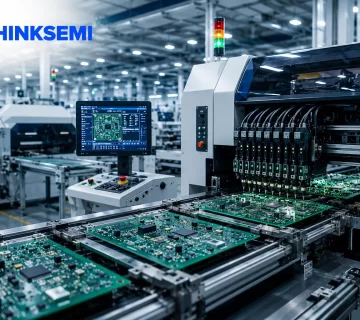
The SMT assembly process consists of several manufacturing operations that have been highly automated.
1. Solder Paste Printing
This is the first step where solder paste is printed on the PCB pads.
The solder paste will be used to secure the electronic components to the board during soldering.
2. Placing the Components
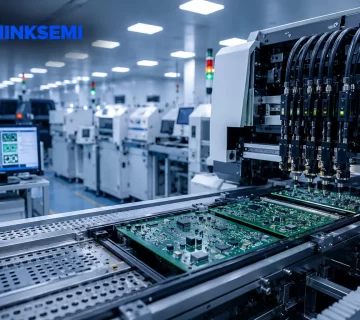
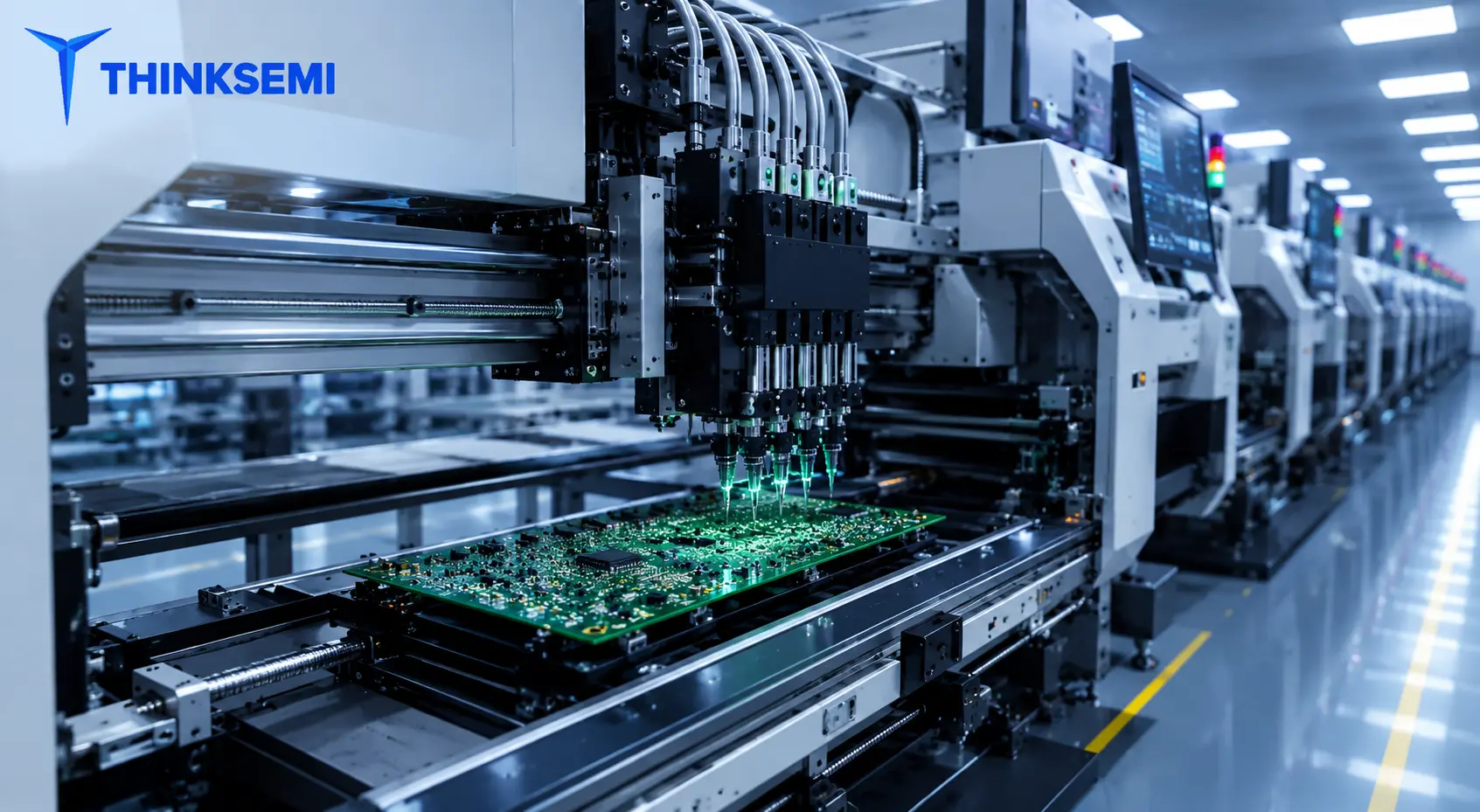
Here, the electronic components are placed precisely into their respective positions on the circuit board surface.
The modern-day SMT machines can assemble up to thousands of components per hour.
3. Reflow Soldering
Once the components have been assembled on the board, they pass into the reflow oven.
The solder paste is melted using heat and bonded to form secure electrical and mechanical connections between the two.
4. Inspections/Quality Checks
After the soldering process is completed, inspections are conducted to check the quality of the assembly process.
These inspections may include:
- AOI (Automatic Optical Inspection)
- X-rays
- Functional test
- ICT (In-circuit testing)
Advantages of SMT Assembly
Compact PCB Design
Since SMT components are small in size, it is possible to develop small and lightweight electronics.
This feature is crucial for devices such as:
- Smartphones
- Wearable devices
- IoT gadgets
- Medical electronics
Faster Manufacturing
An automated assembly process enables quicker production when compared to a manual assembly method.
It offers advantages like:
- Decreased production time
- Ability to manufacture a high number of devices
- Higher efficiency
Greater Reliability
The automated process guarantees reliable electrical connections and quality product manufacturing.
As a result, there will be fewer occurrences of:
- Human errors
- Misalignments of components
- Product failures
Cost-Effective Manufacturing
Automation and proper utilisation of materials allow for reducing expenses on the manufacturing process, especially for bulk orders.
Industries Using SMT Assembly
Consumer Electronics
Electronics such as smartphones, laptops, smart TVs, and game consoles use SMT assembly extensively.
Automotive Electronics
Automobiles require SMT assembled control boards for various subsystems, including:
- Engine control
- Battery management
- ADAS
- Infotainment systems
Medical Electronics
SMT assembly is necessary for precise electronics manufacturing for medical devices.
Industrial Automation
Factory and automation systems need control boards and monitoring systems produced with SMT assembly.
IoT & Smart Devices
Connection and miniaturisation of PCBs require SMT assembly for IoT and smart devices.
Comparison of SMT Assembly to Through-Hole Assembly
There are two assembly techniques that are applied in the electronics industry. The SMT assembly technique has some unique features compared to other methods.
| Feature | SMT Assembly | Through-Hole Assembly |
| Component Size | Smaller | Larger |
| Manufacturing Speed | Faster | Slower |
| Automation | Highly automated | Limited automation |
| PCB Density | High | Moderate |
| Production Cost | Lower for volume production | Higher |
| Applications | Modern compact devices | Heavy-duty applications |
Despite through-hole being used in selected cases, SMT assembly is dominant in modern manufacturing processes.
Why is SMT Assembly Important in Modern Electronics Manufacturing?
With the continuous advancement in the electronics industry, where products become more complex and small-scale, there is a need for technological advances that can accommodate such requirements, such as:
- High-density PCBA configurations
- Shortened production periods
- Accurate manufacturing
- Low-cost scaling
All the above features have been possible with the use of SMT assembly techniques.
And this explains why SMT assembly has become an important part of electronics manufacturing around the world.
Why Work with Thinksemi Infotech for Your SMT Assembly Needs?
Thinksemi Infotech offers innovative SMT assembly and PCB manufacturing services for our customers in automotive, industrial, medical, consumer electronics, and IoT sectors.
These include:
- Automatic SMT assembly
- PCB fabrications and assembly services
- Product prototype to large-scale production
- Quality inspection and testing
- OEM electronics manufacturing services
With state-of-the-art manufacturing facilities and precise quality control systems, we help our customers ensure efficient electronics manufacturing.
Conclusion
SMT assembly has revolutionised the manufacturing of modern electronics, enabling compact design, high-speed production, and reliable PCB assembly solutions. From consumer electronics and automotive systems to industrial automation and IoT devices, SMT technology is a key enabler of today’s connected world.
For reliable electronics manufacturing, businesses need experienced SMT assembly partners that can deliver precision, scalability and consistent quality.
Thinksemi Infotech is your best choice for professional SMT assembly solutions and can help you with your electronics manufacturing needs with advanced PCB assembly capabilities.