As the electronics industry continues to grow, there is an increasing demand for high-quality Printed Circuit Board (PCB) solutions. Whether it be electronics, medical devices, automation and industrial equipment, or consumer goods, circuit boards play an important role in most electronic products. To ensure high-quality, reliable and consistent products are being manufactured, it is important to choose a reliable PCB Assembly Company in India.
India is becoming increasingly popular for businesses wanting to manufacture electronics due to the growing industrial infrastructure, highly skilled workforce and growing technology sectors. Partnering with manufacturers that offer advanced technologies, component sourcing, testing, and end-to-end electronic manufacturing solutions can aid your business.
What is PCB Assembly?
PCB Assembly (Printed Circuit Board Assembly) refers to the process of adding components to a Printed Circuit Board. A blank circuit board contains conductive tracks to link various electronic components together. Once the correct components are added to the board, the PCB becomes a functioning electronic circuit.
During the PCB Assembly Process, solder paste is added to the board, and components are placed, soldered, inspected, and tested. Each stage requires a high level of precision to ensure quality.
A professional PCB Assembly Manufacturer will offer:
- Surface Mount Technology (SMT)
- Through Hole Technology (THT)
- Hybrid PCB Assembly
- Component sourcing
- PCB Prototyping and low-volume manufacturing
- Automated inspection and testing
- End product integration/box building.
Why Choose a PCB Assembly Company in India?
India is becoming an attractive place for businesses wanting to partner with reliable manufacturers. With the growing manufacturing sector in India, it is a great opportunity for start-up businesses, OEMs, technology companies, and industrial businesses
Cost Effective
Manufacturing costs are an important factor when producing electronics. Partnering with an experienced PCB Assembly company in India can help keep your costs down. Efficient manufacturing techniques, local component suppliers, and optimised resources can help reduce costs.
Component sourcing and planning can also help to keep component costs controlled.
Advanced Technologies
As PCB Assembly is a complex industry, advanced equipment is needed to produce small intricate electronics.
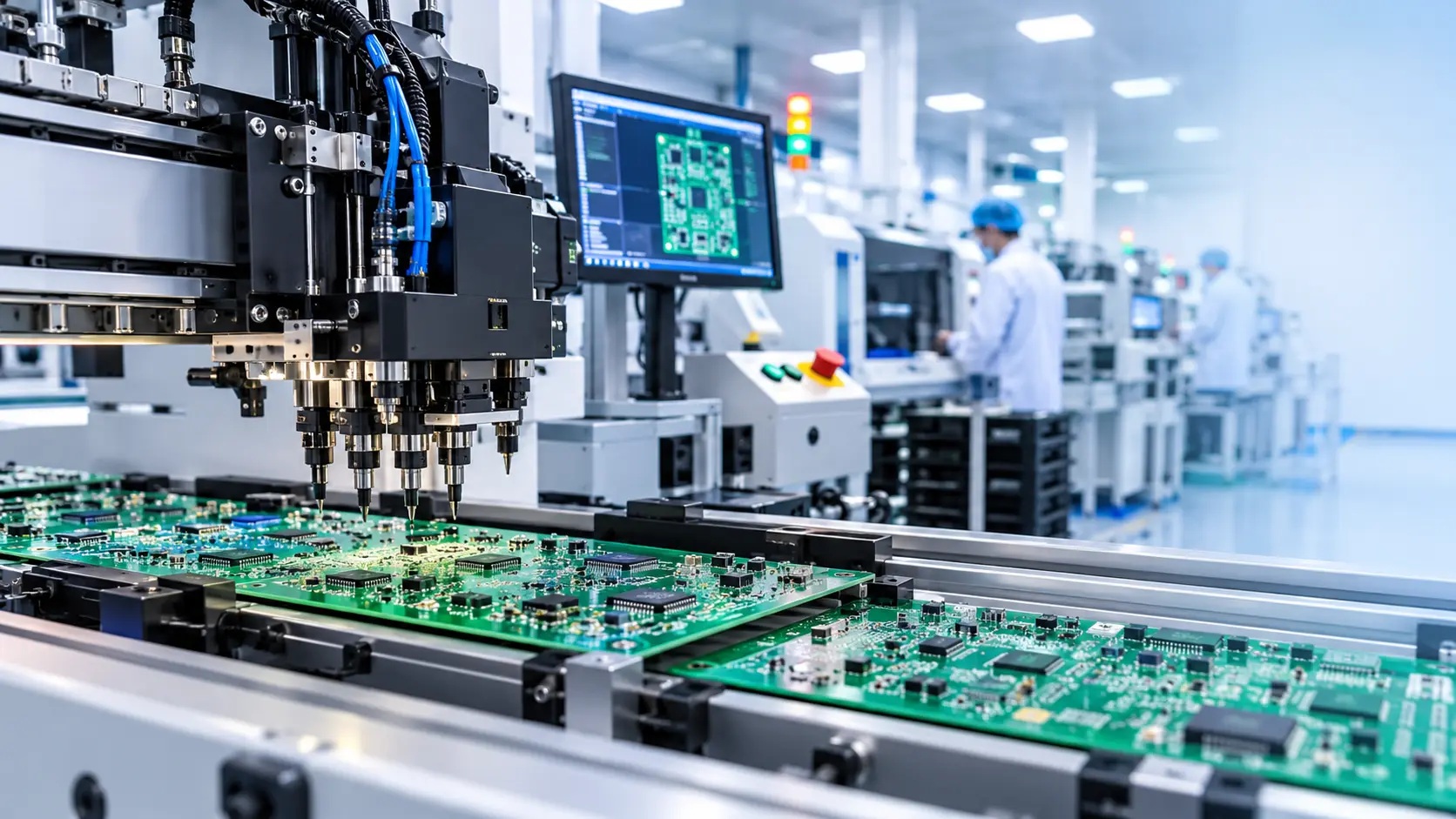
Advanced manufacturing techniques use automated equipment to place components. This includes solder paste printers, pick-and-place machines, and reflow soldering. This helps to ensure accuracy when placing components.
Skilled Technicians
Professional engineers, technicians, and quality experts will be needed to manufacture the PCBs. An experienced manufacturer will be able to help you during the manufacturing process.
Flexible Capabilities
Many businesses will need different manufacturing techniques. Start-up businesses may need a small number of PCB prototypes, whereas an established OEM may need high-volume continuous production.
A capable PCB Assembly manufacturer should offer flexible manufacturing.
End-to-End Electronic Manufacturing
Partnering with a company that offers various manufacturing services can make the manufacturing process easier.
Various services are available, including PCB Assembly, component sourcing, testing, wiring harness, and box building. This will help you manage your electronic product more easily.
PCB Assembly Process
A reliable PCB Assembly Company in India will use a structured process during manufacturing.
Step 1 – PCB Design
Firstly, the customer will provide their PCB design, BOM, component information and manufacturing requirements.
Engineering will review component availability, PCB layout, and soldering requirements. A DFM check will be carried out to identify any issues.
Step 2 – Solder Paste
Next, solder paste will be applied to the correct areas of the PCB using a stencil.
This helps to hold the components in place when placing them. It helps create electrical connections between components.
Care must be taken to ensure there is enough solder paste. Too much or too little can cause issues during the assembly.
Step 3 – Component Placement
Automated pick-and-place machines will place components onto the PCB.
This helps to ensure accurate placement of components, even when working with small components and intricate PCB designs.
Components will need to be placed correctly to ensure good electrical connections.
Step 4 – Reflow Soldering
Once components have been placed onto the PCB, the board will go into a reflow oven. This applies heat to the solder paste to melt it. This creates connections between components and the PCB.
Controlling the temperature helps avoid damaging components.
Step 5 – Through Hole Components
Some electronic products will require components with leads that pass through holes in the PCB.
Through Hole Technology (THT) means the components are inserted into holes in the PCB. These are then soldered in place.
Wave or selective soldering may be used.
Step 6 – Inspection & Testing
Once the PCB has been assembled, it will be inspected and tested for any manufacturing issues.
- This will be done using:
- Automated Optical Inspection (AOI)
- In-Circuit Testing (ICT)
- Functional Circuit Testing (FCT)
- X-Ray (for suitable package/component types).
This helps to identify any issues, such as missing components, soldering issues, component misplacement, and electrical issues.
Step 7 – Final Assembly
Once the PCB has been inspected and tested, approved boards can be sent to the next stage.
Depending on the project, this may involve adding conformal coating, integrating components, wiring harnesses, and box building. Finally, the PCB will be packaged.
Various PCB Assembly Types
When choosing the type of PCB Assembly, it will depend on the design of the product, type of components, environment and manufacturing requirements.
Surface Mount Technology
Surface Mount Technology is one of the most common manufacturing techniques used today.
During this process, components are placed onto the surface of the PCB.
Advantages of this include:
- Fast automated manufacturing
- Accurate component placement
- Suitable for small electronics
- Efficient for high-volume manufacturing
- More surface area can be used on the PCB.
This is often used in consumer electronics, automotive electronics, telecommunications, industrial and IoT.
Through-hole Technology
Through-hole technology means inserting the components with leads into holes in the PCB. These are soldered to the other side.
This is suitable for components requiring strong connections and higher mechanical stress.
This is commonly used in industrial, power, connectors, and select automotive applications.
Hybrid Assembly
Some electronic products will require both Surface Mount and Through Hole components. Hybrid Assembly brings the best of both worlds together.
A manufacturer that offers both techniques will provide greater flexibility for complex electronics.
Factors to Consider when Choosing a PCB Assembly Company
Choosing a reliable manufacturer can greatly impact your product quality, costs, and delivery.
Consider the following when choosing a PCB Assembly company:
Experience – Does the manufacturer have experience of producing similar electronic products?
Equipment – Does the company have modern equipment for SMT, soldering, and automated inspection?
Quality – What methods do they use for inspecting/testing?
Component Sourcing – A reliable component source will help reduce delays.
Scalable Production – Can they produce your prototypes, pilots and high volumes?
Engineering – A company that can offer technical support will help avoid issues during manufacturing.
Communication – Clear communication, realistic lead times, and transparent project management will help with long-term manufacturing.
Industries that Use PCB Assembly
PCB Assemblies can be used in many industries. The design, materials, and testing will depend on the application.
Automotive Electronics
Modern vehicles use electronic systems to control the engine, safety, entertainment, battery, and vehicle. A reliable PCB Assembly will help give the best performance.
Medical Electronics
Medical devices use PCBs in monitoring devices and diagnostic equipment. It is important to have consistent manufacturing and correct quality measures.
Industrial Automation
Industrial machines and automation use electronic controllers, sensors, modules, and monitoring systems. PCB Assemblies help to ensure equipment runs efficiently.
Telecommunications
Networking, communication, signal processing, and wireless equipment all require advanced electronic PCBs.
Electric Vehicles
Electric vehicle technology uses PCBs in battery management, charging, power, and control systems.
Consumer Electronics & IoT
Smart devices, home devices, smart sensors, and wearable devices will all require small and efficient PCB assemblies.
Why Thinksemi Infotech for PCB Assembly in India?
Thinksemi Infotech Limited offer various electronics manufacturing services to help businesses across a range of industries. This includes PCB Assembly, PCBA Prototyping, component sourcing, testing, wiring harness, and box building.
They can help with various stages of manufacturing.
They offer:
- SMT & Through-hole assembly
- Hybrid PCB Assembly
- Prototyping & low volume
- Component sourcing
- Automated Optical Inspection (AOI)
- In-Circuit Testing (ICT) & Functional testing
- Box building & Integration.
Their manufacturing site is based in SIPCOT IT Park, Siruseri, Chennai, Tamil Nadu. They can help a range of industries, including automotive, industrial, medical, telecom, and consumer electronics.
They aim to help businesses take their electronic product from design to manufacturing, using their manufacturing capabilities, engineering support, and quality inspection.
If you need help with prototyping, PCB Assembly, or end-to-end electronics manufacturing, it is important to choose a manufacturer with the correct technical capabilities.
Conclusion
Choosing a PCB Assembly Company in India is an important decision to make. You should choose a reliable manufacturer who has the right technology, skilled technical support, reliable component sourcing, structured quality, and flexible manufacturing capabilities.
Professional PCB Assembly services can help you turn your electronic designs into functioning products. Whether it be surface-mount, through-hole, prototyping, testing, or integration.
Thinksemi Infotech offer PCB Assembly and end-to-end electronics manufacturing to help businesses across a range of industries. If you are looking to create a new electronic product or need a manufacturer for your current project, look into the capabilities Thinksemi offers.
Are you looking for reliable PCB Assembly services in India? Get in touch with Thinksemi Infotech.